

1. Leaving the Well-Lit Road
“You’re leaving the school with immaculate uniforms, perfect grades, and polished futures – to send them to the hippies in the forest? Are you out of your mind?”
That was, more or less, the reaction.
Until recently, our children were enrolled in a prestigious school in the prosperous part of town – the sort of place where classrooms are immaculate, the academic results reassuringly high, and the path from classroom to university seems comfortably mapped in advance.
And yet, after a long season of unease that I could not quite name at first, we found ourselves walking away from that world and toward something smaller, slower, and quieter.
The place our children joined is not a school in the conventional sense. It is a learning community – part of the growing ecosystem of alternative education in Portugal – where children cook, garden, spend long hours outdoors, and participate in the simple rituals of everyday life. Groups are intentionally small. Learning unfolds through free exploration and relationship. Perhaps most strikingly for anyone accustomed to conventional schooling, children have a say on what they want to learn. And parents are welcomed not as outsiders peering through the gate, but as part of the living fabric of the place – an engaged community where families share responsibility for the life of the school.
The role of adults here is not primarily to teach, but to create the conditions in which learning can emerge naturally.
This means protecting long stretches of unhurried time. Trusting curiosity rather than constantly directing attention. Allowing children to move, explore, and return to what calls them, rather than pulling them away to stay on track. Letting them linger with a question long enough for it to become their own.
They speak of educating the head, the heart, and the hands – and of childhood not as a race toward intellectual performance, but as a developmental unfolding of body, imagination, feeling, and thought.
Learning here doesn’t look like something imposed, something children must do.
It looks a lot like life.
Cooking lunch is not a lesser activity than the life of the mind. Climbing trees is not time that could be spent learning numbers. Storytelling, music, and art are not extracurricular activities.
They are the architecture of human development.
In other words, adults organise the environment, but children are deeply trusted to lead the learning with curiosity.
To some observers, this arrangement borders on educational irresponsibility.
And if I am honest, parts of me wondered the same.
One voice inside whispered practical questions in the quiet hours of the night: Are you making a mistake? Are you gambling with their future?
Another part – the good student raised by the old system – insisted that stepping away from the well-lit road was reckless. What if they fall behind? What if the world is less forgiving than your ideals? What about the long, invisible competition that seems to begin so early in childhood?
Yet another part of me, quieter but stubborn, was less impressed by these arguments.
It had watched children hurry through childhood with extraordinary efficiency and very little joy. And it had begun to suspect that the most dangerous thing of all might be raising them inside a system that slowly teaches them to stop listening to themselves.
2. The Grief Hidden Inside School Transitions
When one begins to look closely at how children are usually expected to enter a new school, a peculiar urgency reveals itself.
The scene is familiar in countless places.
A child stands at the threshold of an unfamiliar classroom. The adults offer encouragement that is both warm and hurried. There are reassurances, a quick embrace, and then a subtle pressure to move forward.
“Just leave quickly,” someone will whisper to the parent. “It will be easier.”
Easier, perhaps. But for whom?
Starting a new school is not merely adjusting to a new timetable or teacher. Something far more delicate is taking place. Children do not arrive empty-handed. They carry entire inner landscapes – routines they could predict, caregivers who knew their needs, playgrounds they knew by heart. A world is ending. Another is beginning. To step into a new environment is therefore not simply to encounter novelty. It is to experience a series of quiet separations.
Transitions, in other words, are made of a thousand tiny losses.
And losses have always asked something of the human heart.
They ask time. They ask space. They ask, quite simply, to be felt.
One of the surprising things I have learned while navigating this school transition with my children is how profoundly uncomfortable our culture remains with grief – and more so the grief of children. Recently, when I asked my oldest child gently whether he missed his old friends and teacher, a well-meaning relative reacted with alarm. “Don’t say that!” she whispered urgently. “You’ll make him sad!”
But of course he might feel sad. What else should a human being feel when leaving a place that was once familiar and beloved? Do children struggle with school transitions because they are fragile?
Or because they are honest about what adults have learned to hide?
And somewhere inside that realization, another question began to surface – one that was less comfortable. Was some of the intensity I felt during this transition really about my children? Or was I also touching something much older?
The hurried goodbyes.
The expectation to be brave before the heart had caught up.
The quiet message that tears were inconvenient.
I began to wonder whether the anxiety I was feeling for months before this school transition came from this place. Not only concern for our children, but also the echo of the small child inside who once crossed similar thresholds without the time, space, or understanding that grief requires.
And so I began to watch my own children more closely. They seemed to know something I had long forgotten.
My trained mind still wanted to translate everything into research and theory. And indeed, I found out, many researchers in attachment and emotional development have long been describing what children demonstrate so clearly: transitions are processed through emotion.
Tears, hesitation, clinginess – these are not signs that adaptation is failing. They are the nervous system doing exactly what it is designed to do: integrating the loss of one world and the beginning of another.
When those feelings are allowed to stay and be fully felt – in the presence of calm, steady adults – something quiet but profound happens.
Slowly, the emotion completes its arc. The child settles. The transition completes itself.
When grief is allowed its space, they know exactly how to cross the threshold.
3. When Children Are Allowed to Arrive Slowly
The moment I realized this place was doing something radically different from what I was used to was surprisingly simple.
There was no choreography at the door. No quiet pressure to disappear quickly so the child could “adapt.” No reassuring phrases that really meant leave now before the crying starts.
Instead, the facilitators simply said something that felt almost disorienting in its calm:
“Stay! Stay as long as your child needs. When they feel ready, they will let you know.”
It is difficult to describe how extraordinary those words felt.
And so I stayed. Other parents lingered in the room for a long while too. It seemed to be the custom here. The kids explored the room in widening circles of curiosity. Some drifted toward the table where coloured pencils lay waiting. Others examined shelves of books or wooden objects or crafts supplies. A few clung quietly to their parents while watching the room unfold.
Nothing was hurried.
When the group gathered on the cushions for the morning welcome, my children were not rushed to join. For several days they sat quietly on chairs further away – gently invited, but never forced.
Watching this, something inside me felt both relieved and unsettled. A part of me kept waiting for the moment when someone would intervene – when the invisible clock would start ticking, when the gentle tolerance would give way to efficiency.
But it never did.
Instead, the room seemed to operate according to a different understanding of time: the time it takes for a nervous system to recognise safety.
For my children, a new possibility quietly took shape. School did not have to be something you were pushed into. It could be something you were allowed to arrive in, and slowly unfold into.
4. The School I Grew Up In
For me, those moments carried another resonance entirely.
Somewhere in the room that first morning, though no one else could see her, another child seemed to be standing quietly beside me.
The little girl of hurried transitions.
The girl who didn’t get to hear the words whenever you’re ready.
And yes – by the standards of the system, that girl succeeded.
I became a medical doctor. The kind of achievement parents proudly announce to friends. The ultimate proof that the school system works, the promise of a stable and respectable life.
But if I am honest about my experience of school – from the first day of kindergarten to the final year of medical school – it was not a garden of curiosity.
It was a place of survival. A landscape organised around speed and performance. Adaptation was expected to happen immediately. Emotions, if they appeared at all, were treated as inconveniences to be managed quickly and discreetly.
A place of fight or flight. Of constant vigilance. Of learning very quickly how to mask discomfort and perform competence. Of dissociating as much as necessary to get through the day.
There was open violence sometimes, and the quieter kind that is harder to name – humiliation, constant comparison, subtle shaming, rewards and ranks and grades for everything.
One learned early how to move through the system efficiently.
How to sit still even when the body wanted to move.
How to answer all the questions on the test without asking any of your own.
How to hide confusion, sadness, boredom, or overwhelm behind the acceptable expressions of a good student.
Grades were the currency of that world. And slowly, almost without noticing, the question shifted.
Never What do I want to learn?
But How well did I perform?
Looking back, I realise that much of my childhood education was an exercise in sophisticated masking. The rhythms that mattered were the rhythms of schedules, grades, and keeping up.
The rhythm of safety never entered the equation. Not because anyone was cruel or malicious, but because the system itself had very little space for the inner lives of children.
Everything was organised around the visible curriculum: knowledge, performance, progress.
No mention of the complex emotional weather of childhood. There was, quite simply, no place to feel. And so I entered adulthood intellectually capable of doing impressive things – but far less prepared for the deeper work of being human.
I could study, analyse, memorise, dissociate from all of my own needs, perform under enormous pressure, save lives.
But I was unhappy in ways I couldn’t explain. Emotionally immature. Disconnected from my body. Completely unprepared for the relational complexity of life – and eventually for the profound initiation of motherhood. By the standards of the inner curriculum, I was still in kindergarten.
Which is why sitting now in a classroom where children wander slowly between activities – some curious, some cautious, some lingering near their parents before venturing forward – feels almost surreal.
A kind of beautiful whiplash. The discovery that learning could begin somewhere else entirely. That it could have been different all along. That something simple but fundamental really had been missing.
And once I began to see that, it became difficult not to ask a much larger question.
What exactly have we been asking schools to do?
5. Educating the Whole Human Being
The more I looked at the system I had grown up inside, the more its logic began to make sense. Modern schooling took shape during the industrial age, when societies needed large numbers of punctual workers who could follow instructions, respect authority, and perform reliably within highly organised systems.
Within that paradigm, intellectual performance gradually became the primary focus of schooling. Growing humans, however, are not merely empty vessels waiting to be filled with information. They are living ecosystems of body, imagination, emotion, relationship, and thought.
Educational philosopher Rudolf Steiner observed more than a century ago that childhood unfolds through distinct developmental stages. In the early years, learning occurs primarily through imitation, movement, creativity, and sensory exploration rather than abstract intellectual instruction.
In other words, children learn first through living. Cooking together. Climbing trees. Listening to stories. Making art. Observing insects in the grass.
These activities may appear simple from the outside. But they cultivate capacities that cannot easily be measured and yet shape the entire architecture of a human life: curiosity, resilience, creativity, empathy, and a relationship with the living world.
The learning community our children joined draws inspiration from several educational traditions – including Waldorf, Montessori, democratic education, and the Charlotte Mason approach. Each of these traditions shares a common intuition: children are active participants in their own learning, not passive recipients of information. And when curiosity is trusted, something simple becomes obvious: children love to learn.
And yet, more than a century later, I wonder what Steiner would make of us – still having to make the case that children should not have to abandon their bodies just to get through the school day – still treating anxiety, shutdown, and burnout as if they were somehow normal by age twelve.
For much of the last century, schooling was designed for an industrial world that needed obedience, standardisation, and predictable workers. That world no longer exists.
So why do so many schools continue to operate as if it does – churning out compliance in a time that demands creativity, agility, and independent thinking?
Knowledge is no longer scarce. Information is everywhere. A curious child with time, tools, and guidance can learn more in an afternoon of genuine exploration than in months of forced instruction. What matters now is initiative, creativity, resilience, and the capacity to keep learning and adapting throughout life.
Once I questioned the system, I started seeing the cracks everywhere. The economic story many of us were raised on – that if you work hard, get a prestigious degree, and follow the prescribed path, life will be secure and the future will take care of itself – suddenly felt far less convincing.
In a world that is changing this quickly, it’s hard to believe this old story will prepare our kids for whatever is coming. And I began to question why we would keep feeding children into that same narrow pipeline.
I began to notice new forms of learning emerging everywhere: small learning communities, mentorship models, homeschooling networks, forest schools, democratic education, field-based learning.
Something simple but powerful began to dawn on me. Childhood does not belong to institutions. It is an option to outsource connection, growth and time to outdated systems that flatten individuality.
Which led me to a deeper question: what kind of education actually prepares a human being for life – whatever that life may look like twenty years from now?
Seen through this lens, alternative education is not radical at all. Treating childhood as a race toward exhaustion is. Believing that children must fear failure more than they trust themselves is quite radical.
Because education has never only been about knowledge. It is also about the kind of human being a child is slowly becoming.
Alongside reading, writing, and mathematics, something quieter is always unfolding in the life of a child. Children are learning how to relate to others.
How to recover from mistakes.
How to navigate frustration.
How to handle conflict.
How to listen to the small inner signals that tell them when something feels right or wrong.
This deeper layer of learning is rarely written into lesson plans, yet it shapes the kind of human being a child becomes.
Without wellbeing and emotional safety, intellectual learning struggles to take root.
But when environments cultivate trust, rhythm, and meaningful relationships – when the inner curriculum is nurtured – children begin to develop a quiet but powerful form of inner leadership.
And from that place, learning becomes something alive.
6. When the Nervous System Relaxes
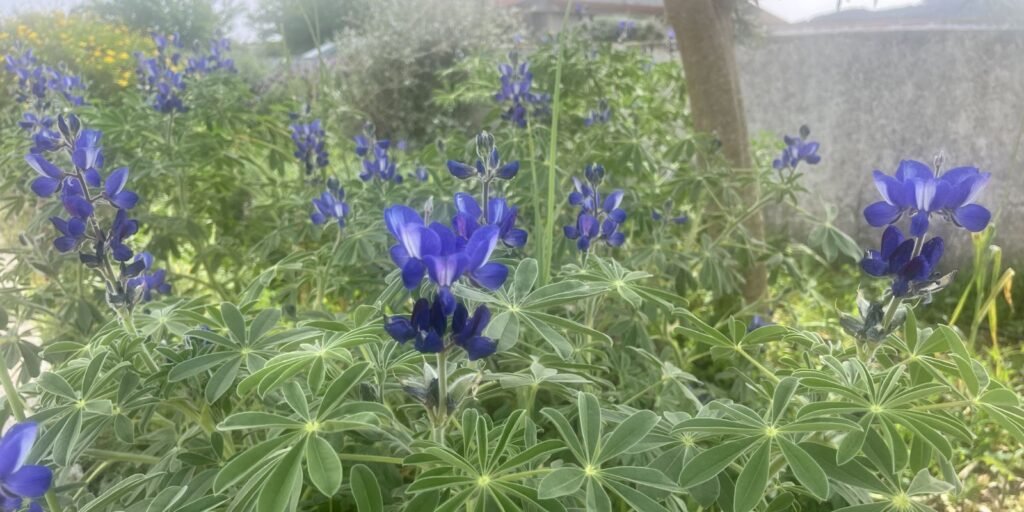
We are one month into this new school, and something changed in our home.
The children are coming back singing. They dance in the kitchen.
Conflicts between siblings – once a daily storm – softened dramatically.
It was as if some invisible tension had dissolved. For the first time in a long time, their nervous systems seemed to exhale.
At first I wondered if I was imagining it. Perhaps they were simply responding to something in me – a mother more at ease, a nervous system no longer carrying the same quiet tension. After all, choosing this path had lifted a weight I had been carrying for years.
But slowly a different understanding began to emerge.
Children who spend their days suppressing their impulses, sitting still when their bodies want to move, complying when their instincts say no, and holding back tears when transitions happen too quickly accumulate an enormous amount of unprocessed tension.
That tension has to go somewhere. Very often, it comes home.
It appears as sibling fights. Explosive emotions.
Power struggles over the smallest things.
But when children spend their days in environments where they can move, choose, explore, express frustration, and follow their curiosity, much of that emotional pressure is released as it arises.
The nervous system does not need to carry it all day. And so the child who arrives home is not a pressure cooker waiting to explode. They are simply themselves.
Learning environments shape nervous systems.
What happens in classrooms does not stay in classrooms.
7. The unexpected gifts of parenting

Watching my children step into this new environment has revealed something I did not anticipate.
Parenting has a way of showing us the invisible forces that shaped our own lives. By giving our children the space we once lacked, we sometimes discover that parts of our own story are still waiting for attention.
In my own work as a physician trained in Internal Medicine, and as an Internal Family Systems psychotherapist, I often see how deeply childhood environments shape the inner worlds people carry into adulthood – and how these experiences are not only held in the mind, but carried, organised, and expressed through the body.
The rhythms we grow up inside – the pace of transitions, the way emotions are held or dismissed, the space given to curiosity and to grief – do not simply shape us. They become the way we inhabit ourselves for decades to come.
Schools, like families, become landscapes of memory within us.
And when children experience learning environments grounded in respect, safety, and curiosity, those landscapes can become places of nourishment rather than survival.
And that changes far more than school performance.
It changes the kind of human being a child becomes.
8. The Day the Forest Answered
On the third day of this strange and tender transition, something else happened that I did not expect.
By then the emotional weather had reached its peak. The children were navigating their own storms of uncertainty and excitement. Inside me, the older currents had begun to rise – griefs I had not realised were still waiting beneath the surface.
I was carrying a newborn on my hip, my body worn thin from nights of interrupted sleep and endless breastfeeding, my mind stretched between tending my children’s needs and quietly re-parenting parts of myself that had never been given the same gentleness.
Everything felt raw.
That morning happened to be forest school day.
At some point the children gathered at the gate, holding hands as they prepared to walk together toward the nearby woods. One of the educators turned toward me casually, smiling, friendly.
“Come with us,” she said. “It’s right here.”
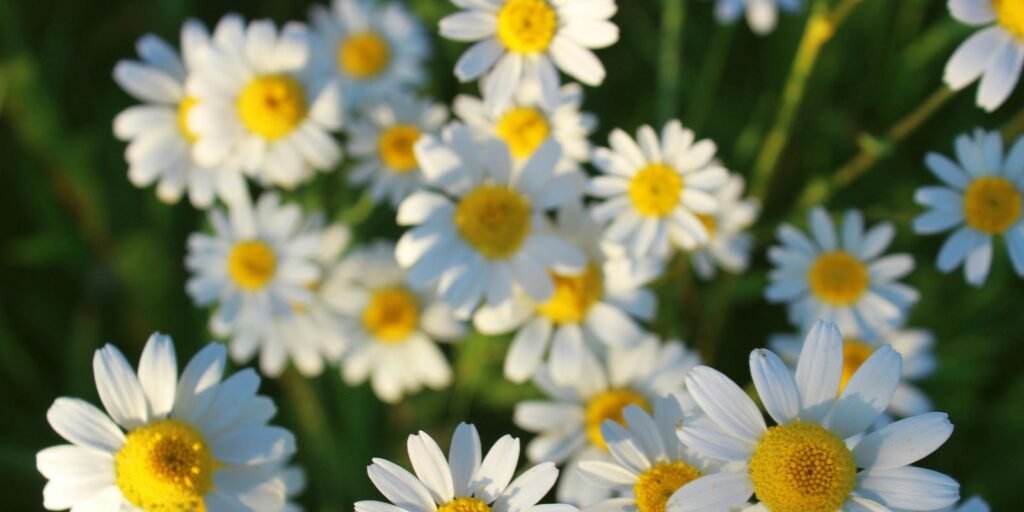
Again that shock of being invited rather than dismissed. And so, with the baby cooing in her carrier, I went. The path opened suddenly into a clearing, and there – as if arranged by a particularly benevolent intelligence – was a wide field of chamomile in full bloom.
Matricaria chamomilla. Mother chamomile.
Thousands of small white flowers, their yellow centres glowing quietly in the morning light. The air was filled with that unmistakable scent – sweet, warm, faintly apple-like – that every herbalist recognises instantly.
Beyond the field the mountains rose in soft blue layers. The sky stretched wide and impossibly clear. The air had that crisp, clean quality that belongs only to winter mornings in the countryside.
Around me, the children scattered through the grass collecting colours. They were preparing an offering for the fairies – arranging leaves, stones, petals, and twigs into a small rainbow of the forest’s gifts.
The whole landscape was alive and speaking. The sudden space seemed to unlock something in their bodies. Within seconds they were running through the field like little wildlings – shrieking, jumping, laughing with a kind of unfiltered joy that only appears when children feel completely free.
For a moment I simply stood there watching them.
Their voices echoing across the clearing.
The baby warm against my chest.
Chamomile scent in the wind.
And suddenly, after months of quiet doubt and second-guessing, something inside me grew still.
No, I’m not out of my mind. If anything, I may have been out of my body for far too long.
And the field itself seemed to understand something about that return.
Chamomile, after all, has long been known as one of the gentlest herbs for infants – the plant mothers reach for when tiny bodies are restless, when digestion is troubled, when the nervous system is overwhelmed.
And here she was, growing everywhere. Freely. Abundantly. As if she had claimed this place as her own. I thought of the small clay pots on my city balcony, where I had tried, with care and effort, to coax chamomile into life – sowing, tending, moving them toward the light, hoping for a handful of fragile blooms I could dry for the baby’s ointments and infusions.
And here, without effort, without intervention, she was everywhere. I bent down, almost needing to be sure. The small white petals, slightly dropped, the hollow yellow cone – unmistakable. Not struggling. Not contained. Thriving.
Standing there with one baby against my breast, the other two running free, breathing in that familiar apple-sweet fragrance, I had the distinct feeling that something profoundly gentle was offering reassurance. This is what happens when life is allowed to grow in the right conditions.
Chamomile. The great mother of the herbal pharmacopeia, holding this tired mother’s body. Holding this nervous system the way good soil holds water.
At some point one of the educators wandered off into the field with my daughter. A few minutes later they returned together, smiling, carrying a small bouquet of freshly picked chamomile.
My daughter placed the flowers carefully in my hands, their scent rising immediately in the cool morning air.
A gift from the field.
And in that moment, surrounded by thousands of her small white flowers, the message felt unmistakably clear.
Your babies are safe here.
They will thrive.
Not as a thought exactly. More as a quiet communication carried on scent and wind.
Chamomile grows where gentleness is possible. And seeing her thriving there, something in my own system finally began to settle.
For the first time since this transition began, all parts of me believed it.
9. A quiet thank you
Spaces like this do not appear by accident.
They exist because educators and families are willing to imagine education differently – and to take the risk of building environments where curiosity, relationship, and human development are treated as seriously as academic achievement. A whole community participating together in the slow, delicate work of learning how to live well.
That work requires courage.
To the educators and families who cultivate spaces like this one – places where children are allowed to arrive slowly, where curiosity is trusted, and where learning is relational, embodied, human, not only intellectual – I offer my deep gratitude.
In a world increasingly defined by speed, competition, and measurement, you are tending something infinitely more delicate.
You are tending childhood.
And when childhood is treated with this kind of care, something extraordinary happens.
They do not fall behind. They flourish.
Flourishing children change the future in ways no exam can measure.
Watching my children cross this threshold has changed something in me as well.
So to all those who are quietly building places like this – thank you for the courage to radically trust childhood.
If this reflection resonated with you, you are welcome to explore more of my work.
Learn more about my approach to healing and living →
And if you would like to receive future essays and reflections, you can subscribe below.