

On the theft of the maternal field, women who learned to grow around ruins and the world built by hurt boys
30 min read time
I. The Destroyer Speaks
“He is sucking your life force from you and taking it away from where it needs to be going.”
My Destroyer part finally told me one day, after many weeks of trying to build a connection with her. She looked less like rage and more like a poisoned oracle. Hooded in deep violet like aconite flowers, holding aconite root in her hands – wolf poison, witch poison, lethal enough to stop a heart in the smallest doses.
“You will respect me now,” she said. She had some ruthless lessons for me. She was not trying to soothe me into consciousness. She was not interested in being fair, compassionate, spiritually evolved, or easy to listen to. She had come to break the spell. She had come to tell the truth.
“Just like his father did to his mum. And the worst part is that you will call it love while it’s happening.”
“You will call it connection. Growth. Polarity. Emotional intelligence. A soul contract. Healing. Anything that allows you to remain inside the structure without naming what it is. And you know exactly what it is.”
Then you’ll go to therapy to figure out what’s wrong with you.
You’ll try to understand why you’re snapping at your kids, why you feel stuck professionally, why your body feels flat or shut down, why you can’t quite access desire and delight, why everything feels like effort, why creativity is gone.
You’ll turn it inward. You’ll make it about your patterns. Your wounds. Your capacity. Instead of asking the simpler, more dangerous question:
Where is my energy actually going?
II. The Domestication of Hera

You might know Hera as the wife of Zeus. The jealous, vengeful wife. An angry woman orbiting a man who repeatedly betrays her. A figure defined not by what she is, but how she spends her time – always reacting, always tracking him, punishing his lovers, unable to contain her rage, easily provoked. The one who became bitter, controlling, always complaining.
The story most of us inherited is not particularly kind to her. Somewhere along the way, we learned to laugh at the woman whose entire existence consisted of managing male behaviour.
But that is not where her story begins.
Before Zeus, before Olympus, before she was ever cast as a wife – Hera was not organised around a man at all. She was a chthonic goddess. Less of a character and more of the very earth-based intelligence of fertility, cycles, and life-ordering.
She wasn’t reactive. She was not even relational. She was the land, the rivers, the trees. Worshipped across entire regions of pre-Hellenic Greece as a primary organizing power of life, associated with birth, abundance, renewal. Her temples were among the largest in the ancient world. She wasn’t secondary. She was no one’s wife.
It is difficult to reconcile this figure with the later image of the woman consumed by jealousy, punishing other women, orbiting the unfaithful husband.
What happened to Hera?
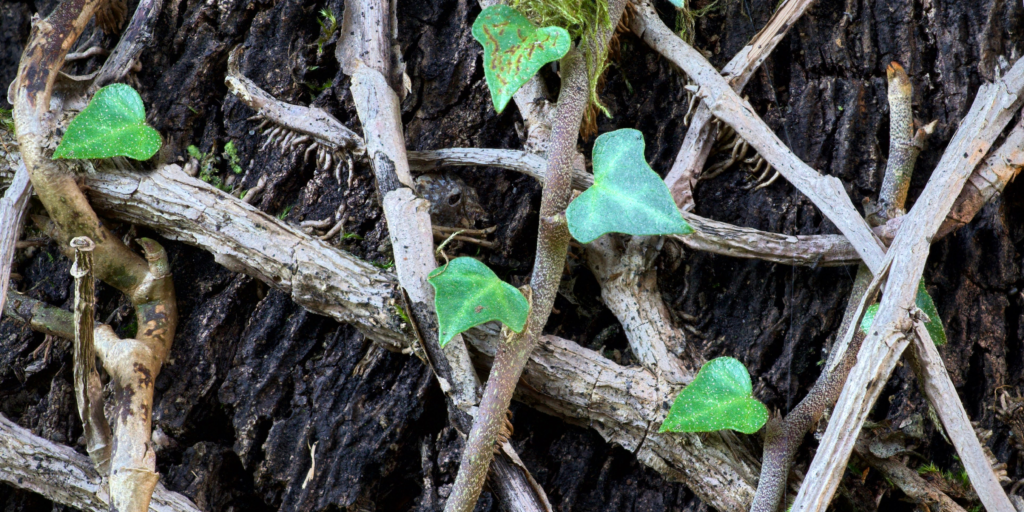
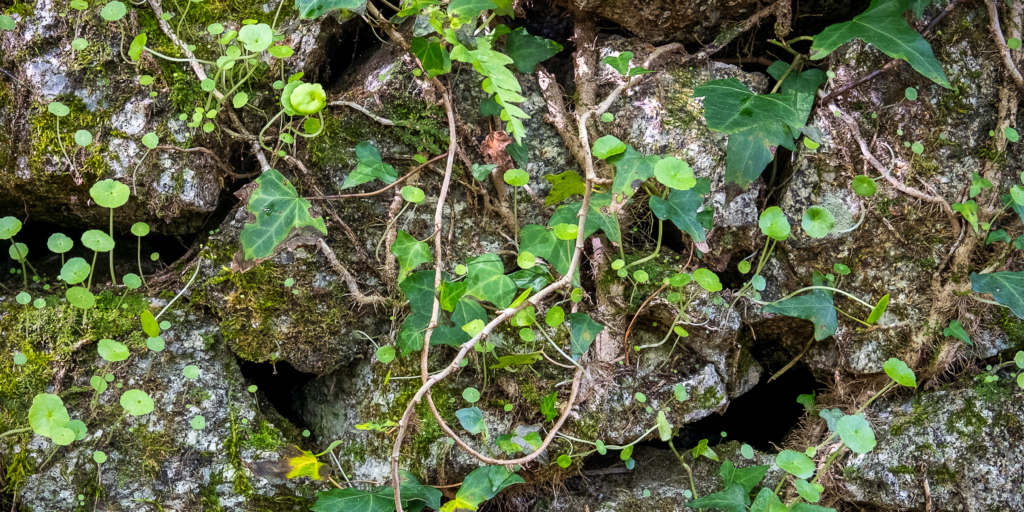
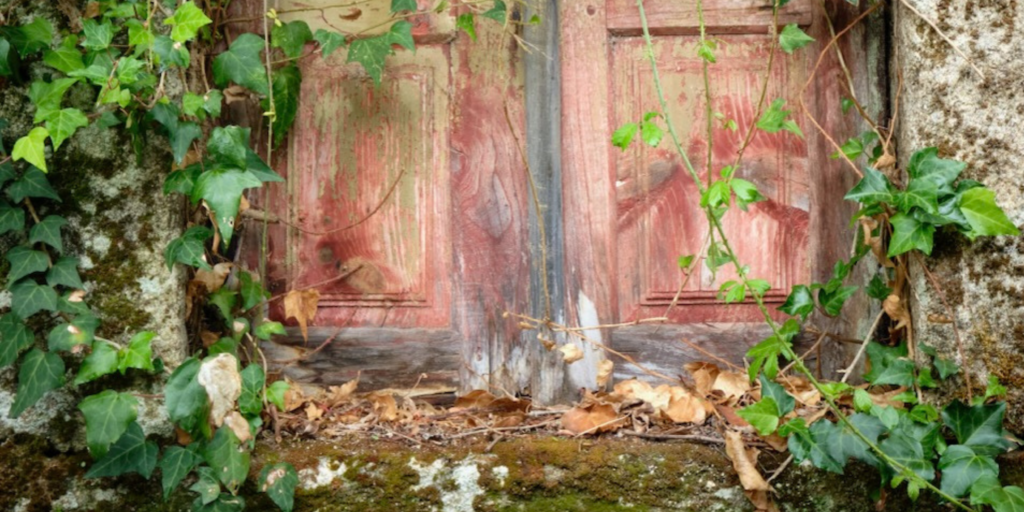
Hera is portuguese for Ivy, from the Latin Hedera. I have always felt there was something strangely important about that. Ivy is also deeply misunderstood. People speak of it as invasive, clinging, dependent. A plant that wraps itself around stronger structures because it cannot stand on its own. But spend enough time watching ivy and another intelligence begins to reveal itself. She grows where ecosystems have been disturbed. Along ruins, fractured walls, abandoned places, forest edges after collapse.
She arrives quietly in dead places and restores life through weaving. She protects exposed soil from erosion. Holds moisture inside depleted ground. Creates shelter for birds, insects, fungal networks. Softens stone. Returns organic matter back into damaged systems. Patiently, almost invisibly, She begins rebuilding the conditions that allow life to return.
Perhaps this is part of what happened to Hera.
With the rise of the Olympian order came a different arrangement of reality itself: hierarchy over reciprocity, conquest over relationship, invulnerability over interdependence. Forms of intelligence rooted in attunement, cyclicality, embodiment, and relational life became increasingly unintelligible to the emerging patriarchal imagination.
The older earth goddesses were not easily absorbed into this new system. But they also couldn’t be erased completely. So they were reorganised – their powers fragmented, reduced, and redistributed across a new mythological order that could contain them. Demeter tends the earth’s fertility. Persephone, the cycles of descent and return. Aphrodite, sexuality and attraction. Hestia, domestic containment. They don’t mix. They no longer move as one living field.
And Hera? Marriage.
The goddess of the forces that generate and sustain life itself becomes psychologically and mythologically trapped inside relationship management. This is not a shift in character. It is not a moral fall. It is a structural demotion.
For myths do not only tell stories. They train perception, they tell generations what to worship, what to fear, what to mock, what to normalize. This is where the myth stops feeling ancient.
From then on, instead of being recognised as the source of life, women are positioned as satellites of male systems. Hera’s rituals are rewritten. Ancient rites connected to fertility and cyclical regeneration of life and renewal are recoded as acts of “re-virginization” and purification in preparation for marriage.
Her connection to life is replaced with her availability to a man.
This is the domestication of Hera. From here, the familiar image takes shape: the reactive, angry wife. Her anger, though, begins to look different. What if Hera’s rage was never irrational?
What if we are witnessing the emotional reality of life force trapped inside a structure that extracts from it and will not recognize its sovereignty? Forced to remain in relationship to what continuously violates it. Could Hera’s rage itself be a kind of Destroyer response – the psyche’s last defense against prolonged humiliation?
III. The children of Hera
The devaluing of the maternal destroys boys psychologically before it destroys women relationally.
What becomes visible, when you begin to trace these myths back to the culture that produced them, is not just a pattern between men and women, but a contradiction embedded into the very structure of society itself.
Ancient Greek society was openly and unapologetically male dominated. Only free adult men could be citizens. Women could not vote, couldn’t hold political office, couldn’t represent themselves legally, and were excluded from all public debate and civic life. A man could sell his daughter or even his sister into concubinage. Authority, status, visibility and power – these were organized around men.
And yet, inside the home, the child’s inner world was not organized around the father at all. It was centered around the mother. She fed him, soothed him, regulated him, absorbed him. Through her, he first encountered emotion, dependency, comfort, tenderness, frustration, need itself. Through her body, voice, touch, gaze, and nervous system, he first learned whether life itself felt safe to inhabit. She held the atmosphere of the home while occupying the lowest rung inside it. Psychologically central. Socially irrelevant. Essential, but dishonored.
The child’s psyche forms inside that contradiction. He depends entirely on the feminine while watching the culture degrade it in real time. The atmosphere of the home becomes his first experience of how vulnerability is held. Whether need is met with steadiness or collapse. Whether dependency feels safe or humiliating. Whether tenderness remains connected to dignity or fused with depletion, resentment, self-erasure, overwhelm.
And when the maternal field itself is saturated with unprotected pain, humiliation, chronic exhaustion, unsupported need, or powerless rage, this is the emotional reality of the home.
Children cannot perceive systems, so they personalize what they feel. He does not see a woman carrying impossible conditions. He experiences only the atmosphere and learns quickly: emotion overwhelms. Need destabilizes. Dependency humiliates.
Through the mother, the child first learns what happens to vulnerability in this world.
So the psyche splits.
Meanwhile the distant father, precisely because he is less emotionally entangled, often remains idealized. Untouched by vulnerability. Respected. Free. Powerful. Stable. His needs are met.
This split is carried through adulthood. A boy who never learned how it feels to be held without cost does not grow into a man who can hold. He grows into a man who longs for the maternal while simultaneously defending himself against it.
His adult partners eventually begin constellating the original maternal field. Their needs, disappointment, longing, emotional intensity, exhaustion, or rage unconsciously reactivate the atmosphere he experienced as overwhelming in childhood. Women aren’t inherently incomprehensible or overwhelming – his nervous system learned early that feminine means humiliation, engulfment, depletion, or helplessness.
They may genuinely crave closeness while experiencing need as destabilising or dangerous. Intimacy becomes both desired and destabilizing. The closer she gets to exposing dependency, grief, shame, vulnerability, or need, the more forcefully his defenses reorganize against contact with those states. Not always because anyone is consciously deceptive, but because unresolved protectors will destroy intimacy before allowing unbearable vulnerability into consciousness. Withdrawal, emotional shutdown, pornography, compulsive work, addiction, disappearing into screens, spiritual bypassing, chronic ambiguity around commitment – these are often not random personality flaws. They are protector strategies organized around avoiding contact with profound unmet dependency and vulnerability.
The Destroyer parts, who will do anything to make sure the system stays in power. Parts that would rather attack need than feel it. Parts that would rather sever attachment than risk humiliation. Parts that would rather punish the woman than come into conscious contact with the terror of not being held.
The longing woman becomes “needy.” The grieving woman becomes “dramatic.” The disappointed woman becomes “nagging.” Misogyny begins here: not simply as hatred of women, but as terror of the vulnerable dependent self projected outward onto them. A kind of dissociated dependency panic.
What also begins organizing here is far larger than individual psychology. Destroyer-type parts do not emerge because people are mean. They emerge because somewhere deep in the psyche, the system arrives at the unbearable conclusion: need is dangerous because unmet need is humiliating. And from there, entire identities – entire cultures – begin organizing against dependency.
Civilizations that do not protect vulnerability produce complementary distortions in everyone: fragile masculinity, emotionally unstable mothers, contempt for dependency, exploitative hierarchies, emotional shutdown, even ecological destruction itself.
This is what we see encoded in Greek mythology. Myths show dangerous, vengeful, overwhelming female figures and a number of heroes whose life is shaped by conflict with the maternal. These gods behave like neurotic beings; they are expressions of psychologically fragmented structures. Each god a different strategy for managing unresolved maternal dependency.
Zeus attempts to dominate it through conquest, sexual expansion, and grandiosity. Apollo distances himself from it through emotional restraint, purity, and detachment. Orestes resolves the tension through literal matricide, the fantasy that the maternal bond itself can be severed. Heracles, whose very name means “Glory of Hera,” spends his life shaped by conflict with the maternal force that both formed and tormented him.
Different sets of protector strategies disguised as gods. Power organized around contempt for vulnerability. Identity organized against need. A performance of autonomy built on top of unmet dependency. Fertile ground for the psychic numbing required to exploit people, destroy nature, and sever human life from its own capacity for care. The inability to remain present to vulnerability without shame eventually becomes the inability to remain present to life without violating it.
Underneath it all, little boys whose first experience of love was fused with depletion, overwhelm, humiliation, or emotional instability.
Sometimes these defenses become openly criminal. In March 2026, CNN exposed vast online networks where men shared strategies for drugging, violating, and filming unconscious women, often their own partners. The investigation revealed something chilling: vulnerability itself had become eroticized precisely because it was unconscious, defenseless, unable to confront or expose the perpetrator.
This is the endpoint of a psyche that cannot remain in relationship to the defenceless without needing to overpower it. One of the largest platforms involved was called Motherless.com. The symbolism is devastating. This one platform, where a “rape academy” was hosted, had 62 million visits in February alone.
The fracture does not distort men alone though. Hera women develop their own Destroyers. But theirs organize differently: not around avoiding dependency, but around avoiding the humiliation of continuing to need someone who cannot meet them. The unbearable humiliation of continuing to hope, continuing to need, continuing to offer love where reciprocity does not exist. In fact, both men and women develop Destroyers inside systems where vulnerability is not protected. Only the adaptation differs: men destroy dependency; women destroy longing, softness, hope, receptivity, need, or themselves.
Even Hera’s motherhood survives in fragmented form. Her children are not symbols of integrated nurturance, but of the distortions produced by a fractured maternal field: Ares, the god of war, aggression, bloodlust. Hephaestus, the rejected and humiliated son. Eileithyia, goddess of painful childbirth.
The children of domesticated Hera split between violence, rejection, and suffering.
IV. The theft of the maternal field

The maternal field is the warmth, presence, attunement, nourishment. This is how we all learn what safety feels like in a physical body. It is the life-organizing intelligence that allows bodies, children, creativity, homes, relationships, and futures to be nourished into being.
The maternal field is not women’s obligation to endlessly caretake others. The maternal is not even synonymous with women either. It is a human function: the capacity to hold, regulate, nurture, protect, and sustain life. Women are often socially and biologically positioned closer to aspects of this function, but the distortion itself is not reducible to gender. This dynamic appears in romantic heterosexual or queer relationships, friendships, therapy/coaching spaces, workplaces, spiritual communities – anywhere one person becomes responsible for metabolizing the unmet emotional life of another.
Anywhere one person becomes “the field”, the other begins unconsciously feeding on their regulation, care, vitality, and emotional continuity, while reciprocity slowly collapses. Because this pattern appears so frequently in heterosexual dynamics, I’ll use she/he language here, but the structure itself is not gendered.
It’s almost impossible to see while you are inside one of these dynamics. They rarely begin as exploitation. They begin as intimacy. Chemistry. Care. Genuine affection. The desire to love and be loved. And because the bond itself is often real, it can take years to understand what is actually happening. Especially if you are someone with a strong capacity for attunement. Especially if you learned early to anticipate needs, maintain connection, soften conflict, stay emotionally available, or derive self-worth from being able to hold others through difficulty.
Often, the person doing the extracting is not consciously cruel at all. It’s not evil so much as a developmental tragedy: a fragmented psyche that never learned how to feel safe without unconsciously centering its own unmet needs inside the emotional lives of others.
The imbalance often remains invisible for years, until the regulating partner develops legitimate needs of their own and discovers the relationship cannot reorganize to hold them too. A widely discussed 2009 study published in the journal Cancer found that men were significantly more likely to leave a partner diagnosed with serious illness than women were to leave ill male partners. Female gender itself was found to be the strongest predictor of partner abandonment.
The relationship could organize around her caregiving. It often could not reorganize around her need.
The same pattern often emerges during matrescence. When the maternal field finally redirects toward the new mother’s own legitimate dependency needs, relationships organized around extraction frequently begin to destabilize. Not because children destroy intimacy, but because vulnerability exposes whether care was ever mutual to begin with.
And this is where the dynamic becomes profoundly confusing. He may genuinely love his partner. He may genuinely be in pain. He may even possess significant emotional insight, and still remain psychologically incapable of sustaining mutuality. He emerged from the same fractured relational field.
He is the son of a Hera woman. And because the need itself remains unconscious, it often reappears as a subtler form of entitlement: an unspoken expectation that the woman will continue providing emotional labor, regulation, patience, erotic availability, psychological insight, relational continuity. That she will keep holding the field no matter how depleted she becomes.
This is the moment where many women start turning against themselves.
Because the body knows long before the mind is willing to admit it. The body knows when energy is only flowing one way. It knows when care has become extraction. It knows when intimacy is no longer creating vitality, but consuming it.
And yet these dynamics can become extraordinarily difficult to name clearly, precisely because they are woven through real attachment, real tenderness, real longing, real love. The relationship does not feel empty. It feels charged. Necessary. Fated, even. People can remain inside profoundly depleting structures for years without fully understanding what is happening to them.
Meanwhile, the maternal field continues to bleed.
And this is how the pattern perpetuates itself across generations. A maternal field that is chronically depleted, preoccupied, emotionally overextended, or forced into regulation instead of presence cannot fully initiate children into secure relationship with vulnerability, dependency, emotional clarity, and embodied presence.
The child still receives love and care.
But often not the experience of deeply resourced, fully rooted, emotionally available containment that allows vulnerability to become safe rather than overwhelming.
The devaluing of the mother does not merely harm women. It destabilizes the developmental environment that would have allowed boys to become integrated men.
So boys grow up learning to source their safety through the feminine. And girls grow up learning to offer themselves up willingly.
V. Exiles will not stop seeking redemption

This is usually the point where women come to me in therapy asking the wrong question.
The entire culture has trained them to locate the problem inside themselves, so here they come. It’s usually a version of either “How do I make him meet me?” or “Why do I keep attracting unavailable men?”
By the time these women arrive in my practice, they are already deeply self-aware. They understand attachment theory. They know what anxious and avoidant dynamics look like. They can identify childhood wounds, nervous system activation, trauma responses. Intellectually, they often understand the relationship perfectly. And yet something in them still reaches. This is the part I think many psychological conversations fail to grasp deeply enough.
It’s because the exile is what fuels projection, and they will not stop seeking redemption.
In Internal Family Systems, exiles are the parts of us that carry unmet developmental pain. The parts burdened with abandonment, humiliation, rejection, invisibility, loneliness, worthlessness, not being chosen, not being protected, not mattering enough. They are often formed very early, before we had the capacity to metabolize overwhelming emotional experiences on our own.
Exiles are completely untouched by our intellectual insights. They are looking for resolution. For the moment the original wound finally unfolds differently. Intellectually understanding patterns does nothing for their pain.
You’ll find this phenomenon described many different ways from different thinkers throughout the centuries – how relationships are unconsciously organized around mutual incompleteness management rather than actual encounter. The other person becomes carrier of unlived parts of the self, symbolic redeemer, guarantor of wholeness, the imagined answer to an ache that began long before the relationship itself.
Projection is one of the most intoxicating experiences available to the psyche. The beloved becomes luminous. Charged. Mythic. Not merely themselves, but a carrier of possibility. A doorway back into aliveness. A promise that the parts of us stranded in abandonment, loneliness, invisibility, longing, grief, erotic hunger, spiritual yearning, or unmet dependency might finally come home. Jung called this completion fantasy. The psyche locating disowned or unlived aspects of itself in another person and becoming magnetized toward them.
Which does not mean the love is fake. Quite the opposite. Projection often arrives carrying real psychic material. Real longing. Real unlived life. Real soul movement. Falling in love can feel initiatory. Something dormant inside us suddenly comes alive. The problem begins when we mistake the activation for the person. When we unconsciously believe the other is responsible for delivering the wholeness they merely awakened us to.
So when an emotionally inconsistent or psychologically uninitiated man or woman falls in love and briefly opens, softens, attunes, mirrors, reaches, chooses, or reveals vulnerability, something extremely powerful happens in the relational field. The exile recognizes possibility and clings to it like survival itself.
The exile does not experience the relationship as optional. It experiences it as salvation.
Unfinished attachment pain will override almost any amount of insight in its attempt to finally secure the love, protection, attunement, or choosing that once went missing. And when the maternal field itself has already been shaped around caregiving, self-abandonment, or emotional accommodation, the attachment becomes almost impossible to loosen.
Women who are highly empathic, conscientious, emotionally attuned, psychologically aware, or strongly identified with caregiving are particularly vulnerable to these dynamics because they have often been rewarded their entire lives for overriding their own signals. They become extraordinarily skilled at tracking others while losing contact with themselves.
This is for the healer, the therapist, the emotionally intelligent partner, the one who can hold complexity, the one who understands trauma, the one who stays calm, the one who sees the wounded child underneath the behavior. The one who goes to therapy. These capacities are beautiful. But inside distorted relational systems, they are often recruited into stabilising the relationship, outside of Self-leadership.
Usually these women keep trying to love at the level of the wound, offering themselves up as the solution. And when things start shaking, the system often responds not by withdrawing projection, but by intensifying effort.
Unfortunately, our protector parts do not surrender simply because they are understood. This is another place where many intelligent people become trapped inside endless cycles of analysis, couples therapy, spiritual framing, emotional labor, nervous system work, communication strategies, and attempts to “heal the relationship.” Not because they are incapable of discernment, but because some part of them still believes redemption is possible if they can finally get the attachment bond to stabilize.
The exile keeps interpreting every return as proof that repair is still possible. If I understand him well enough. If I love him correctly. If I stay steady enough. If I can finally become important enough not to be abandoned. Then perhaps the wound will close.
And yet, the tragedy is that the people who most powerfully activate these exiles are often defending against dependency at all costs.
So the relationship oscillates. Fusion and rupture. Closeness and withdrawal. Hope and collapse. Moments where intimacy feels suddenly real, followed by distance, ambiguity, coldness, defensiveness, self-protection, or even cruelty. The nervous system never fully settles. Some part of the psyche remains permanently braced against abandonment.
And the body keeps a far more honest ledger than the mind does. Eventually it begins sending signals. Exhaustion. Hypervigilance. Loss of desire. Loss of creativity. A strange inability to access joy. The sensation of carrying emotional weight that never quite lifts. Eventually the body begins speaking through anxiety, chronic pain, burnout, mysterious symptoms.
And here we are back at the beginning, where many women make the mistake of pathologizing themselves. They go to therapy trying to understand why they are so reactive, anxious, exhausted, needy, depressed, dysregulated, disconnected from pleasure, disconnected from purpose.
What if your system is responding appropriately to chronic emotional extraction?
And once that question enters consciousness, the entire relational structure begins rearranging itself. This is why the collapse of projection feels so devastating. It is not simply heartbreak. It is the psyche losing its imagined path back to wholeness. It can feel like annihilation.
People often describe this phase as if they are dying, losing meaning, losing reality itself. The grief can feel disproportionate to the relationship because what is collapsing is not only attachment to a person. It is attachment to a psychic structure that organized hope, longing, identity, and survival.
Alchemy called this stage nigredo. The blackening. The dismemberment that begins when illusion can no longer sustain itself. Psychologically, something profoundly important is happening. For the first time, the psyche is being asked to stop seeking completion externally and begin reclaiming the life force that had been organized around projection.
This is the moment where the question changes. From: “How do I get him to meet me?”. To: “What have I abandoned in myself while trying to secure love?”
Projection retracting is not the end of love. It is the end of fantasy. What remains afterward may be grief, tenderness, truth, distance, compassion, ambiguity – or perhaps, for the first time, real love unhooked from unconscious completion strategies; love that is no longer intoxicated by the fantasy that another person can become the missing architecture of the Self.
VI. Motherhood as a healing portal

Enter matrescence. It is one of the most revealing moments in the entire system.
Motherhood redirects the maternal field away from regulating the adult and toward the child – and that often exposes the entire structure.
Before the baby, the woman can often still maintain the illusion that the relationship is mutual enough. She can continue compensating, regulating, accommodating, eroticizing the caregiving, interpreting extraction as intimacy.
But motherhood changes the direction of the maternal field.
For perhaps the first time, her body, nervous system, instincts, attention, and life force are no longer primarily available to organize around the relationship. It is claimed by the newborn. And suddenly, some things become impossible to ignore.
It’s not that the postpartum woman becomes irrational, hormonal, or depressed, as culture loves to frame it, but that the relational system is being reorganized around an actual developmental need that rightfully takes precedence.
Nature intervenes. The maternal field turns toward the vulnerable infant. And psychologically uninitiated men often cannot tolerate that shift. Not consciously, necessarily. But structurally. The field they were sourcing regulation from is no longer fully available. Worse: it is now demanding care in return.
Dynamics that were latent become overt: withdrawal, resentment, emotional abandonment, criticism, self-centering, inability to step into caregiving, demands for attention precisely when she is most depleted.
This is why so many women describe the transition into motherhood as the moment they truly saw the relationship clearly. If he has not developed the capacity to tolerate dependency without resentment, participate in care rather than merely receive it, or remain emotionally present to intensity without being unconsciously mothered himself, the system destabilizes very quickly.
The new mother has legitimate needs now. Massive ones. She is physically opened, hormonally crashing, psychologically reorganizing, sleep deprived, flooded with attachment instincts, often isolated, and in desperate need of protection, nourishment, practical support, emotional steadiness, tenderness, devotion, reverence.
In healthy systems, the community and the masculine close around the mother so she can close around the baby. But in distorted systems, the mother is still expected to continue regulating everyone else while receiving almost nothing herself.
And the body eventually revolts against that impossibility. This is why postpartum so often becomes a site of feminine rage, grief, disillusionment, and awakening. Where the “good wife” suddenly becomes the nagging, impossible, never-satisfied woman. Why so many relationships disintegrate after the birth of a child.
Not because motherhood made women angry or unstable, but because motherhood clarifies where the life force was always meant to go – and suddenly the extraction becomes impossible not to see.
This is where I first encountered my Destroyer part. And through her, I understood something that had once seemed incomprehensible to me: how vulnerability that was never protected becomes unbearable to remain in contact with – how a man could deeply love his child and yet become distant, cold, or cruel toward the woman who had just torned herself open through one of the most vulnerable thresholds a human body can endure in order to bring his child into the world.
I began to understand my Destroyer. She was not “Mom Rage” as the internet likes to make fun of. It was not resentment over losing comfort, romance, travel, leisure, or the life that existed before children, though that is how it is often interpreted. My own devastation was framed as lifestyle dissatisfaction in couples therapy, translated into something shallow enough for the system to tolerate.
I remember postpartum depression being quietly floated around me while the relational conditions producing the collapse remained entirely unexamined. My Destroyer promptly refused all drugs suggested.
She taught me something else entirely: she was not activated by simple discomfort or pain. She was activated by the endless extraction, by the fact that I kept offering life where life was not being reciprocated. And she taught me it is the same wound underneath it all, the terror of unprotected vulnerability. The only difference is we adapted in opposite directions. One over-functions to preserve attachment, the other distances to preserve autonomy.
But underneath both lives the same devastating conclusion: need is threatening because need was not safely held.
VII. Rewilding Hera
In some myths, Hera has a fourth child: Typhon. A monstrous serpentine being associated with violent storms, volcanic destruction, and chaos itself. Typhon is born from Hera alone, through parthenogenesis, as a retaliatory act after Zeus gives birth to Athena from his head. In other words: masculine consciousness attempts to bypass the feminine entirely, and Hera responds by generating a force of chaos powerful enough to threaten the cosmic order itself.
Typhon is volcanic rage. The ultimate Destroyer. Uncontained instinct. The return of what has been humiliated, bypassed, or exiled. After Zeus defeats him, Typhon is imprisoned under Mount Etna, where his rage still erupts through volcanic activity.
Typhon is not Olympian. He belongs to older earth-chaos forces. So symbolically he almost represents what patriarchal order cannot metabolize. The mythic name for civilization’s shadow.
Typhon teaches us what is exiled does not disappear. What is not integrated gets buried alive beneath civilization – until the mountain starts shaking.
He teaches us no amount of love can make another person initiate into themselves. No amount of attunement can compensate for someone else’s refusal to remain present to their own vulnerability, dependency, grief, or need. And no amount of self-abandonment will ever turn extraction into devotion.
Motherhood exposes this. Hera names it. The body revolts. The field returns.
So the question changed.
What would it mean to stop leaving myself in order to love?
What would it mean to become impossible to disconnect from my own aliveness?
What would it mean to return the maternal field to wildness – not endless emotional labor organized around holding fragile adults together, not martyrdom, not self-erasure disguised as devotion. But what it was always meant to be.
The source. The condition that allows life to organize, flourish, root, soften. Because life force does not just disappear. It redirects. For years, mine had been organized around tracking, anticipating, regulating, softening, explaining, repairing, waiting, hoping, managing instability, trying to secure connection.
And when that house of cards finally began collapsing, when the field was no longer hemorrhaging energy into maintaining fear-driven systems, something extraordinary began to happen. Enormous amounts of energy suddenly became available again.
House of Hera emerged underneath it. The slow return of aliveness around what once had to brace so hard it became stone.
Ivy intelligence. Life returning around ruins.
The body softens differently. Creativity returns. Desire returns. Clarity returns. Instinct returns. The nervous system stops spending every ounce of energy tracking instability and begins reorganizing around creation instead of protection.
Something deeper is refusing now. Life itself is trying to move again.
The old adaptations no longer work. The good wife. The endlessly understanding partner. The woman who can hold everything. The woman who can explain away her own loneliness. The woman who keeps translating her intuition into something more digestible.
This is the deeper meaning of rewilding Hera.
Rewilding Hera is not “women reclaiming themselves.” It’s not about feminine empowerment. It’s about how civilizations organized around the exiling of vulnerability produce relational extraction, emotional fragmentation, ecological destruction, and disconnection from life. How it all comes from the same psychic split: the inability to remain in reverent relationship with dependency.
And it is about how the only way out of here is restoring conditions where vulnerability becomes safe again.
Ivy grows around ruins, but it does not restore life through force, conquest, perfection, or domination. It restores life through the slow reweaving of relationship: through enough reverence, dignity, reciprocity, and presence that vulnerable parts no longer need to hide beneath Destroyers. Through creating enough safety for life to return on its own.
Which is true of all healing Not fixing people, not optimizing them, not helping them perform wellness while their inner worlds remain fragmented. But restoring relationship to the parts of the Self that were exiled, humiliated, abandoned, overburdened, or forced into survival adaptations.
Like Ivy, in Internal Family Systems, healing does not happen by destroying protectors or overpowering symptoms. It happens when enough presence, safety, dignity, and compassion emerge that protective parts no longer need to organize the psyche around hiding terror.
The system softens because it no longer feels alone. The exile no longer has to scream. The Destroyer no longer has to burn everything down to protect dignity.
A return to the conditions that allow life to organize coherently again.
A Self-led, instinctual, rooted relationship with life itself.
Hera was never truly destroyed, only domesticated. What has been domesticated can be remembered and returned to wildness. And when it does, something ancient begins breathing again through the body.
The field itself.
Deep reverence to Iris Lican Garcia, who first opened the story of Hera to me and helped midwife much of what would eventually become The House of Hera.
Photography by Dave Tucker, with gratitude.